Did you know that wasabi grows in Tokyo?
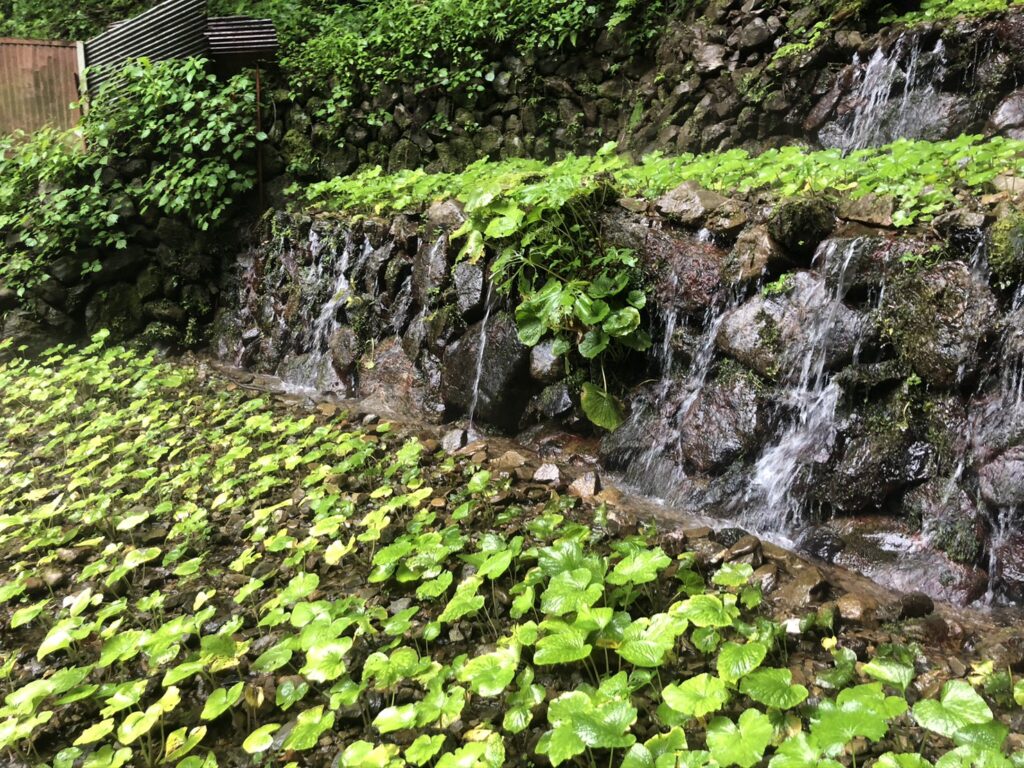
Here in Okutama, the mountainous western edge of Tokyo, wasabi has been cultivated in spring-fed terraced beds since the Edo period — it was even presented to the Tokugawa shoguns. We are wasabi farmers in Okutama, and this page is our guide to what wasabi really is.
The “Wasabi” You’ve Eaten Probably Wasn’t Wasabi
Most of the green paste served outside Japan — and even much of what is sold in Japanese supermarkets — is not real wasabi. It is typically a blend based on horseradish (a relative of wasabi), colored green.
Real wasabi, often called hon-wasabi (“true wasabi”) in Japanese, is a completely different experience: fresher, more aromatic, with a clean heat that rises through your nose and disappears in seconds. Because it is difficult to grow and loses its flavor quickly after grating, real wasabi remains rare — even in Japan.
What Kind of Plant Is Wasabi?
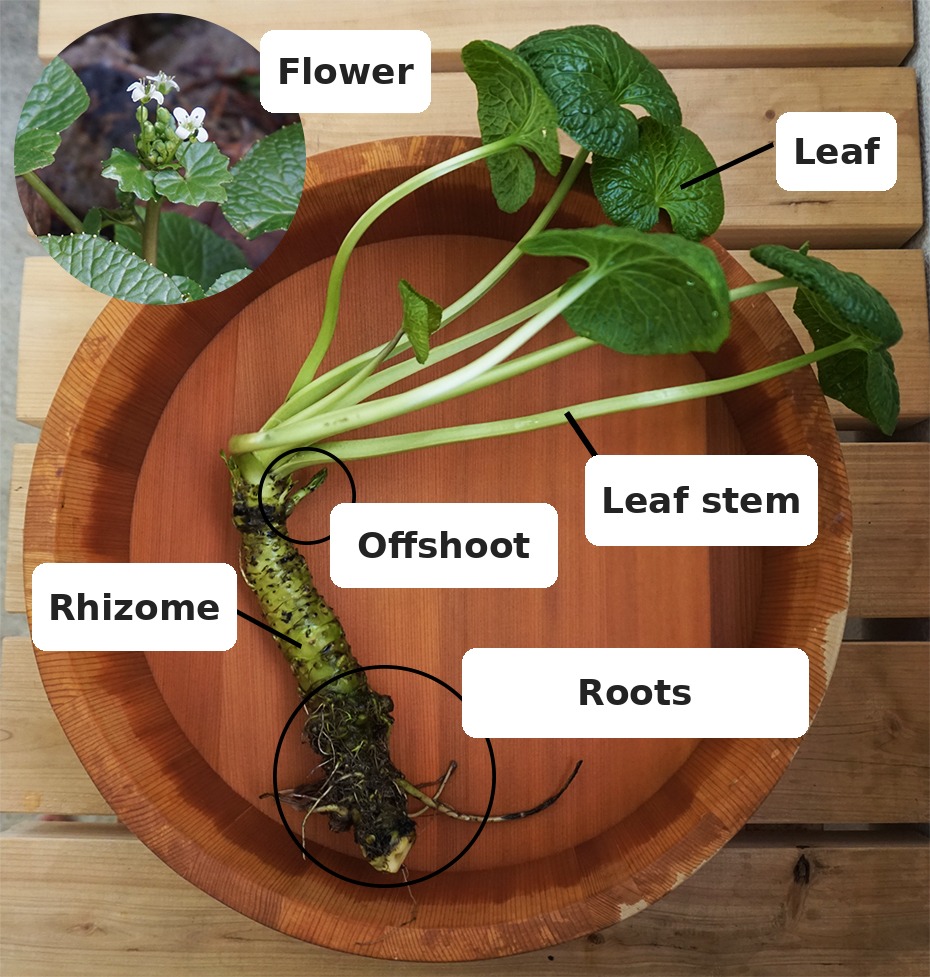
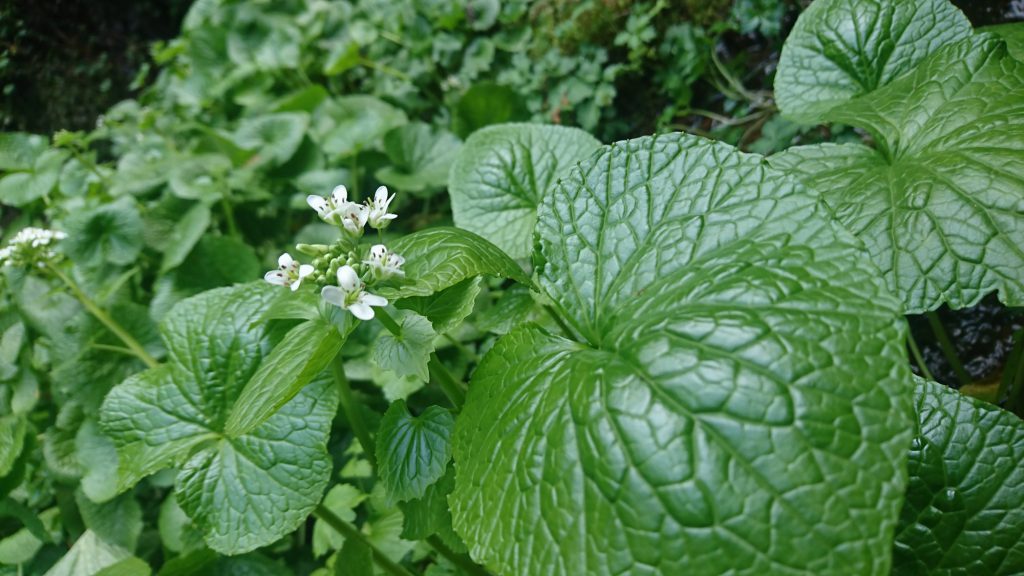
Wasabi (Eutrema japonicum) is a perennial plant native to Japan, belonging to the Brassicaceae family — the same family as cabbage, daikon radish, and broccoli.
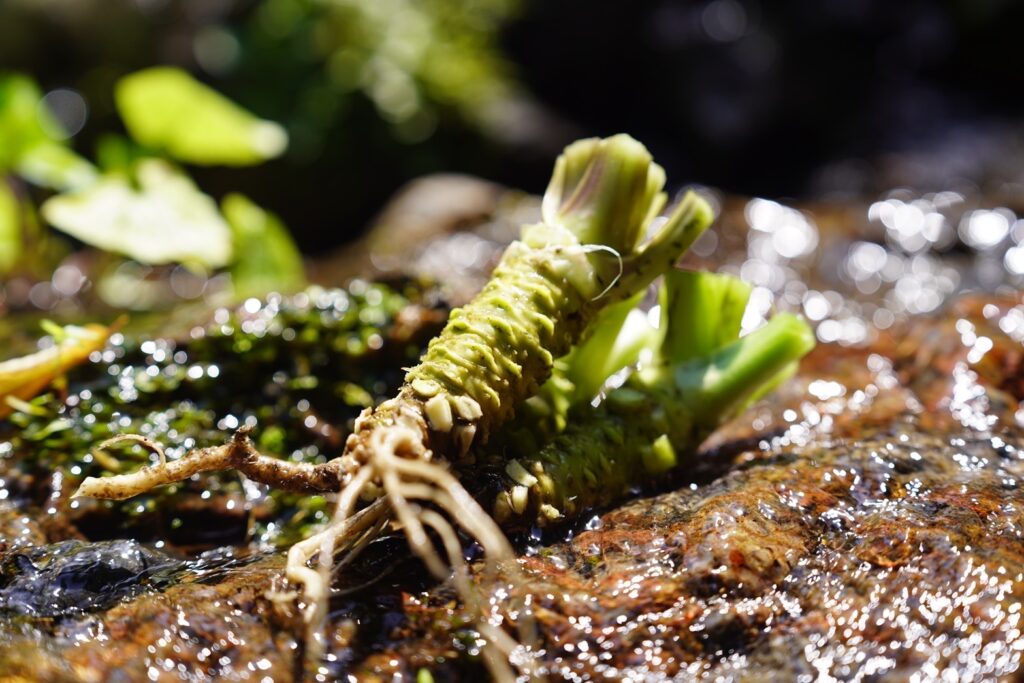
The part we grate is not a root but the rhizome: a thickened stem that grows at ground level, similar in nature to ginger or lotus root. The plant has four parts — roots, rhizome, stems, and leaves — and almost nothing goes to waste. The stems and leaves are used for pickles such as wasabi-zuke, and even the flower buds, which appear in spring, can be prepared and eaten.
Two Ways of Growing Wasabi
There are two main cultivation styles:
- Water-grown wasabi (mizu-wasabi) is raised in beds of constantly flowing spring water. The clean, cold flow lets the rhizome develop — this is the wasabi you grate.
- Field-grown wasabi (hatake-wasabi) is planted in soil. Instead of the rhizome, the stems and leaves grow well, and these are used mainly for processed foods.
Interestingly, wasabi develops different parts of itself depending on where it is planted.
Japan’s main water-grown wasabi regions are Nagano, Shizuoka — and Okutama, Tokyo, which ranks third in Japan for water-grown wasabi production (2022).
Why Is Wasabi Hot? (And Why the Heat Vanishes)
The heat of wasabi comes from allyl isothiocyanate (AITC). The plant stores a precursor compound called sinigrin; when the cells are broken by grating, sinigrin reacts with an enzyme (myrosinase) and AITC is created on the spot.
AITC is volatile — which is why wasabi’s heat rushes through your nose and then vanishes, unlike the lingering burn of chili peppers. It also means:
- Grate only what you will eat right away — the flavor fades over time.
- A fine grater releases more heat; if you prefer it milder, let it rest for a moment.
AITC is also known for its strong antibacterial properties — one reason wasabi has traditionally been paired with raw fish.
Why Wasabi Needs Pristine Water
Wasabi is famously difficult to grow, and it only thrives where the water is exceptionally clean. Here is the fascinating reason: wasabi can poison itself.
As it grows, wasabi releases AITC to keep other plants away from its nutrients. But that same pungent compound builds up around the plant and stunts its own growth. Constantly flowing spring water washes the AITC away — which is why wasabi beds must have clean, cold, ever-moving water.
The Okutama Method
Okutama’s wasabi beds are terraced into steep mountain streams at high elevation, fed by spring water that stays between roughly 12–16°C all year — ideal conditions for wasabi, which also dislikes strong sunlight.
Over generations, Okutama’s farmers combined the strengths of Japan’s two classic bed designs — the older jisawa style from Shizuoka and the layered-stone tatamiishi style — and adapted them to Okutama’s terrain and cold winters. The resulting Okutama method uses small stones rather than sand on the bed surface, with ridges and furrows arranged to control the water flow. The beds are not gathered in one place but scattered in small patches deep in the mountains.
A History That Reaches Back to the Shoguns
Wasabi appears in Japanese records as far back as the Asuka period (6th–7th century), and in the Heian period it was listed in Japan’s oldest medicinal herb encyclopedia. For centuries it could only be gathered wild from mountain streams.
Cultivation began about 400 years ago in Utogi, Shizuoka. In Okutama, wasabi has been grown since the Tokugawa era and shipped to Edo (old Tokyo) for some 200 years. It was presented to the Tokugawa shogunate — Tokugawa Ieyasu, a famous gourmet, is said to have loved it and encouraged its cultivation.
By the Meiji era, wasabi had become a vital source of income for these mountain villages: an 1905 record shows the village of Hikawa (near today’s Okutama Station) earning far more from wasabi sales than its entire annual budget. In 1953, local growers united to form the Okutama Wasabi Cultivation Association, which still protects Okutama’s wasabi farming today. Two of our members belong to it.
Okutama Wasabi Today
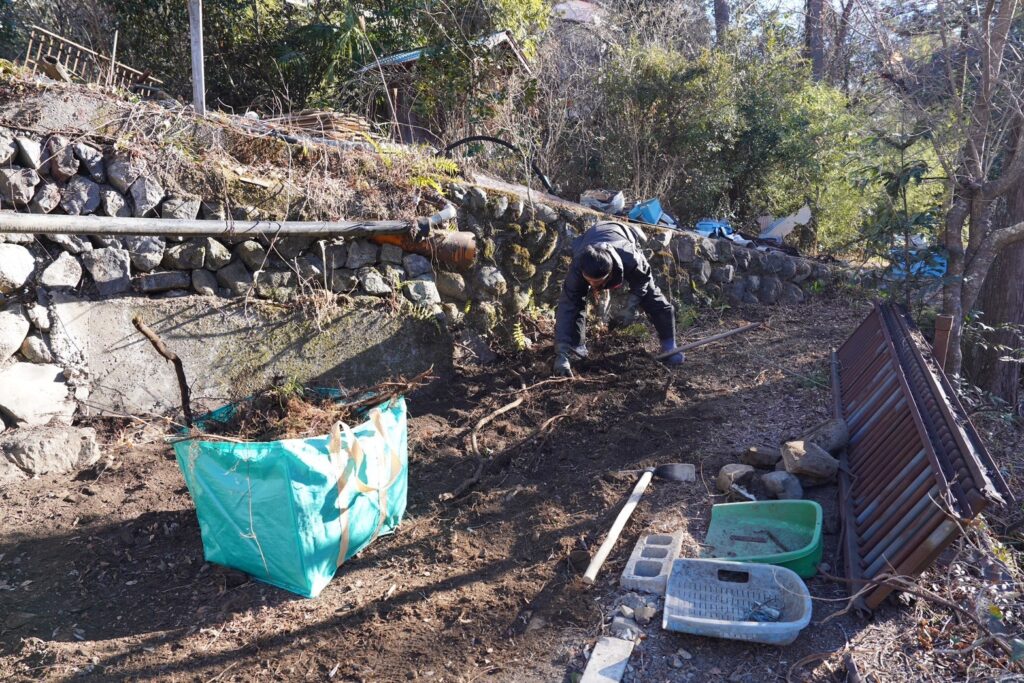
The association now has about 60 members, with an average age over 60. In 2019, Typhoon Hagibis caused catastrophic damage — roughly 2.36 billion yen in losses — and some wasabi beds remain destroyed to this day.
Wasabi farming is hard physical work: the beds sit on steep mountain slopes (farmers once climbed for over two hours to reach them), stone walls must be rebuilt by hand, and deer, boars, and bears are constant visitors. Today, only a handful of people in Okutama farm wasabi full-time — one of them is our member Tacchan.
We joined the association to help carry this tradition forward, growing wasabi and restoring storm-damaged wasabi beds. You can watch our restoration work on our YouTube channel — we have a lot of fun doing it.
Taste Real Wasabi in Okutama
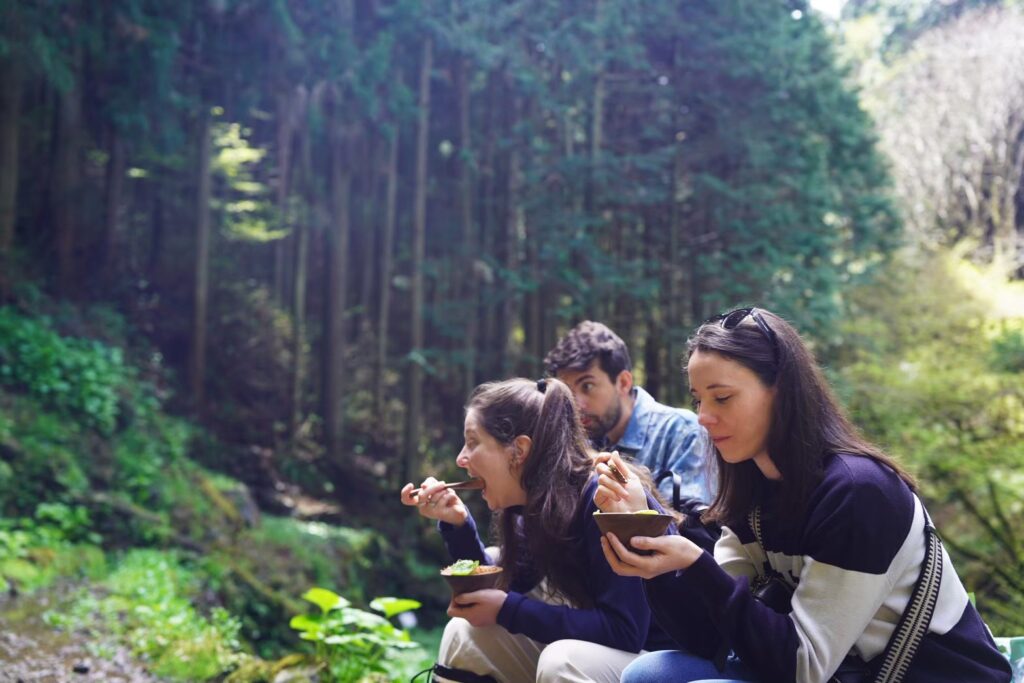
The best way to understand real wasabi is to taste it — freshly grated, at the farm where it grew. Join our Wasabi Experience Tour and walk into a working wasabi farm in the mountains of Tokyo, just 90 minutes from Shinjuku.